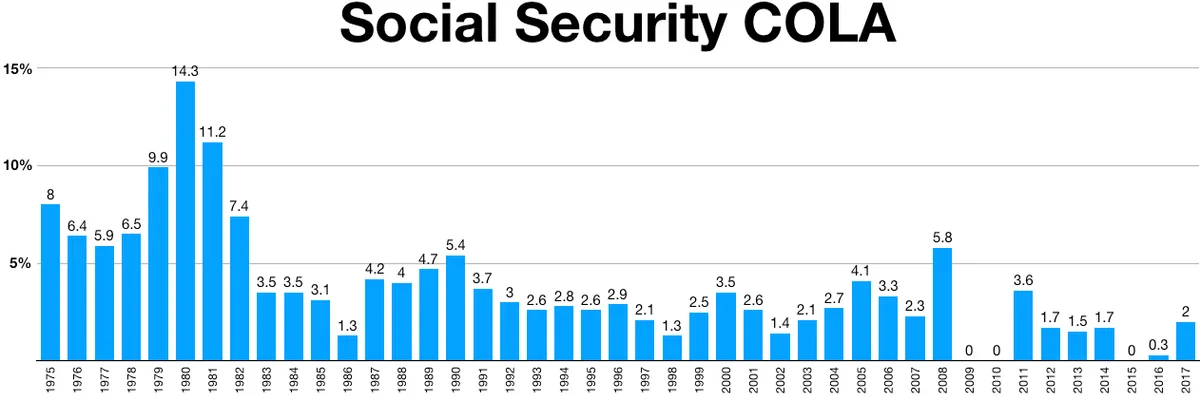
The social security cost-of-living adjustment is an annual increase in benefits. It exists to keep monthly payments in step with inflation. When prices for everyday goods rise, the adjustment raises benefits so the same check buys roughly the same amount.
The increase is not chosen by Congress each year and is not a bonus. It is a formula-driven change tied to a federal inflation index. Some years it is large, some years it is small, and in rare stretches of flat inflation it can be zero. What it never does is cut benefits; the adjustment only works upward.
Confusion around the topic is common, because two different ideas share the phrase "cost of living." One is the government measure behind the benefit increase. The other is the personal cost-of-living estimates used to compare cities and states. Knowing the difference makes the whole subject easier to follow. For related coverage, see Deleted Viral Posts: Archiving and the Evidence They Leave Behind.
What is a social security cost-of-living adjustment?
A cost-of-living adjustment, usually shortened to COLA, is the yearly raise applied to Social Security benefits. Its job is narrow: offset inflation. If the general price level rises over the year, benefits rise to match. If prices barely move, the adjustment barely moves either.
The adjustment applies broadly. Retirees, survivors and disability beneficiaries all receive it, because they all draw from the same benefit system. The new rate takes effect with the benefit payments for the following year, and the higher amount then becomes the baseline for future adjustments.
That last point matters. A COLA compounds. Each year's increase builds on the already-adjusted amount, not on the original benefit. Over a long retirement, a series of modest annual raises adds up to a meaningfully larger check than the starting one.
How is the increase actually measured?
The adjustment is tied to a federal consumer price index, a measure of what a typical basket of goods and services costs. When the index shows that prices rose over the measurement period, the benefit increase follows that rise. The government announces the figure once a year, and the announcement is public.
This is where the two meanings of "cost of living" diverge. The government index behind the COLA is a broad national inflation measure. It is not built around any one person's budget, and it is not adjusted for where you live. A retiree in an expensive coastal town and one in a low-cost town receive the same percentage increase.
Personal cost-of-living estimates work differently. According to Salary.com, a cost-of-living index estimates the basic necessities required to live, typically covering housing, food, healthcare, transportation and energy, and is used to compare what those expenses look like in one location versus another. Those estimates vary sharply by place. The same source shows a single person in Rockport, Maine facing about $2,287 in monthly expenses, while a family of four there faces about $5,039. Livingcost.org puts Maine's overall one-person cost of living at $2,353 a month, slightly above the United States average.
So the COLA answers a national question, while a cost-of-living index answers a local one. Both are legitimate. They simply measure different things, and mixing them up is the root of most online confusion about the adjustment.
What does the adjustment mean for your monthly amount?
In practice, the adjustment changes one number: the gross monthly benefit. The percentage increase announced for the year is applied to the current benefit, and the result is the new payment amount before any deductions. Medicare premiums, where they apply, are subtracted after that, which is why the change a person actually sees in their bank deposit can differ from the headline percentage.
The size of the adjustment moves with inflation. A year of fast-rising prices produces a larger increase. A year of stable prices produces a small one, or none at all. There is no minimum and no target; the formula simply follows the index it is tied to.
One honest limitation is worth stating plainly. The adjustment matches a national basket of prices, not any individual's actual spending. If your own costs, such as rent or healthcare in a high-cost area, rise faster than the national index, the increase may not fully cover them. That gap is a known feature of the system, not a mistake in your payment.
Why do COLA rumors spread every year?
Because the adjustment affects tens of millions of payments, every annual announcement is followed closely, and every announcement breeds copycat claims. Recirculated posts inflate the figure, invent an early payment date, or attach the increase to a supposed new law. The claim usually starts as a social media post, loses its context, and travels faster than any correction.
The reliable habit is the same one that works for any viral claim: trace it to the original named source. For the adjustment, that source is the government's own annual announcement, not a screenshot of a screenshot. If a post cites no official statement, treat the figure as unconfirmed until you can find the primary source. The same source-first method applies to TikTok rumors and to the copypaste warnings that resurface on Facebook each season. This connects to our earlier piece, TikTok Rumors: A Verification Method That Starts at the Source.
More coverage of how claims move online lives in our Social section.
What this means: the practical takeaways
Our analysis of how the system works comes down to a few plain points. The social security cost-of-living adjustment is automatic, formula-based and announced publicly once a year. It protects the buying power of benefits against national inflation. It is not a bonus, not negotiable, and not the same thing as a local cost-of-living comparison.
- Confirmed: the adjustment is an annual, inflation-linked increase applied to monthly benefits.
- Confirmed: the amount follows a federal consumer price index and is announced publicly.
- Unconfirmed by nature: any specific percentage or payment date circulating before the official announcement. Wait for the named primary source.
What remains unknown in any given year is the next figure, because it depends on inflation that has not yet been measured. The evidence supports the mechanism, not a forecast. Anyone who claims to know next year's adjustment before the official announcement is guessing, and the safe response is to check the government's own statement when it comes.