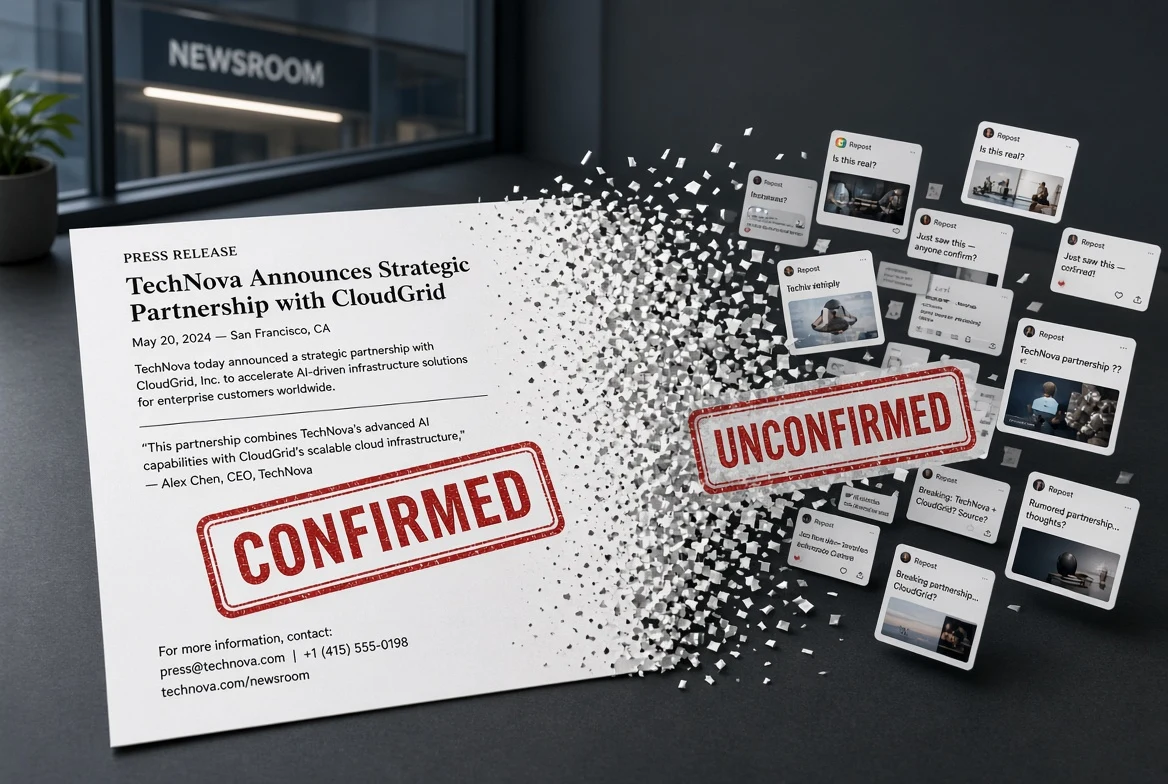
Video game leaks come from four main sources: studio insiders sharing unreleased material, public legal filings that disclose roadmaps, retail and rating-board listings that slip early, and dataminers pulling unannounced content from shipped code or beta builds. The pipeline is real enough that major leaks have repeatedly been confirmed — but the same channels carry fabrications, and the accounts amplifying them face no penalty for being wrong. Understanding which source produced a leak is the only reliable way to judge it.
Where do game leaks actually come from?
Insider leaks range from a developer screenshot passed to a journalist to full-blown breaches: in one of the industry's largest incidents, footage of an unfinished Grand Theft Auto title appeared online in 2022 after a network intrusion, an event the developer publicly confirmed and law enforcement later prosecuted. Court filings are another verified channel — litigation between publishers has entered the record with sales figures and unreleased project details. Rating boards and online storefronts also leak routinely, when a listing appears before an announcement.
Datamines are mechanical rather than human: files shipped inside updates contain references to unannounced characters, modes or sequels, and miners extract them. Datamined content is real code but not a promise — cut or experimental material ships in builds all the time.
What is a rumor mill account?
An anonymous social account that claims insider sourcing and posts casting calls, release windows and project names. A handful have genuine records; the majority post unverifiable guesses optimized for engagement. The economics reward volume: a fabricated claim costs nothing, and one accidental hit — or a lucky guess repeated across many predictions — buys credibility that carries the next twenty misses. Industry reporters at established outlets distinguish themselves by staking named reputations and being answerable to editors; anonymous accounts are answerable to nobody.
Why do publishers stay silent on true leaks?
Strategy and contracts. Confirming a leak can trigger contractual disclosure obligations with platform holders, shift marketing timelines the publisher has budgeted months for, and move stock-sensitive information in ways lawyers must control. A studio's standard move is the non-denial — "we do not comment on rumor or speculation" — which the public reads as confirmation but which commits to nothing. Silence is also leverage: a leaked project still unannounced can be revealed on the publisher's schedule with momentum intact.
What was the E3 2021 leak?
A demonstration of how fragile the announcement pipeline is: ahead of the June 2021 expo, a security researcher publicized vulnerabilities in the ESA's E3 website portal that exposed the personal data of thousands of registered media and industry attendees — sensitive information including contact details and home addresses. The ESA confirmed the exposure and the expo's site was taken offline while it was fixed. The incident compounded the decline of a show already disrupted by the pandemic, and E3 was later cancelled for good. It showed that even the industry's central marketing event could not guarantee the confidentiality of its own registrants.
How do you judge a leak's credibility?
Ask where it originated, not how confident it sounds. A screenshot with no provenance proves nothing — interface mockups are trivial to fake, and fabricated leak images have repeatedly fooled large accounts. A document with verifiable details, filed in a real court case or posted by a named reporter with a track record, is a different tier entirely.
- Verified tier: publisher statements, court filings, confirmed breaches, material extracted from shipped code.
- Reported tier: established trade journalists citing named-or-described sources with editorial accountability.
- Rumor tier: anonymous accounts, forum posts, blurry screenshots, "my uncle works at..." — treat as entertainment, not information.
Who pays for leaks?
Everyone involved, eventually. Studios lose announcement impact and sometimes employee morale; leakers face termination, lawsuits and, in breach cases, criminal prosecution. Audiences pay a subtler price: leaked footage of unfinished games is routinely judged as final quality, and developers have publicly described the demoralizing effect of years of work first seen in a broken, out-of-date build. The 2022 breach prompted an industry conversation about how coverage of stolen material affects teams that had no choice in its release.
The viewer's rule of thumb: a leak's credibility lives in its provenance. Content with a traceable origin — a filing, a confirmed intrusion, shipped files — deserves attention. Content whose only credential is an anonymous account's confidence deserves skepticism, no matter how specific the details sound.