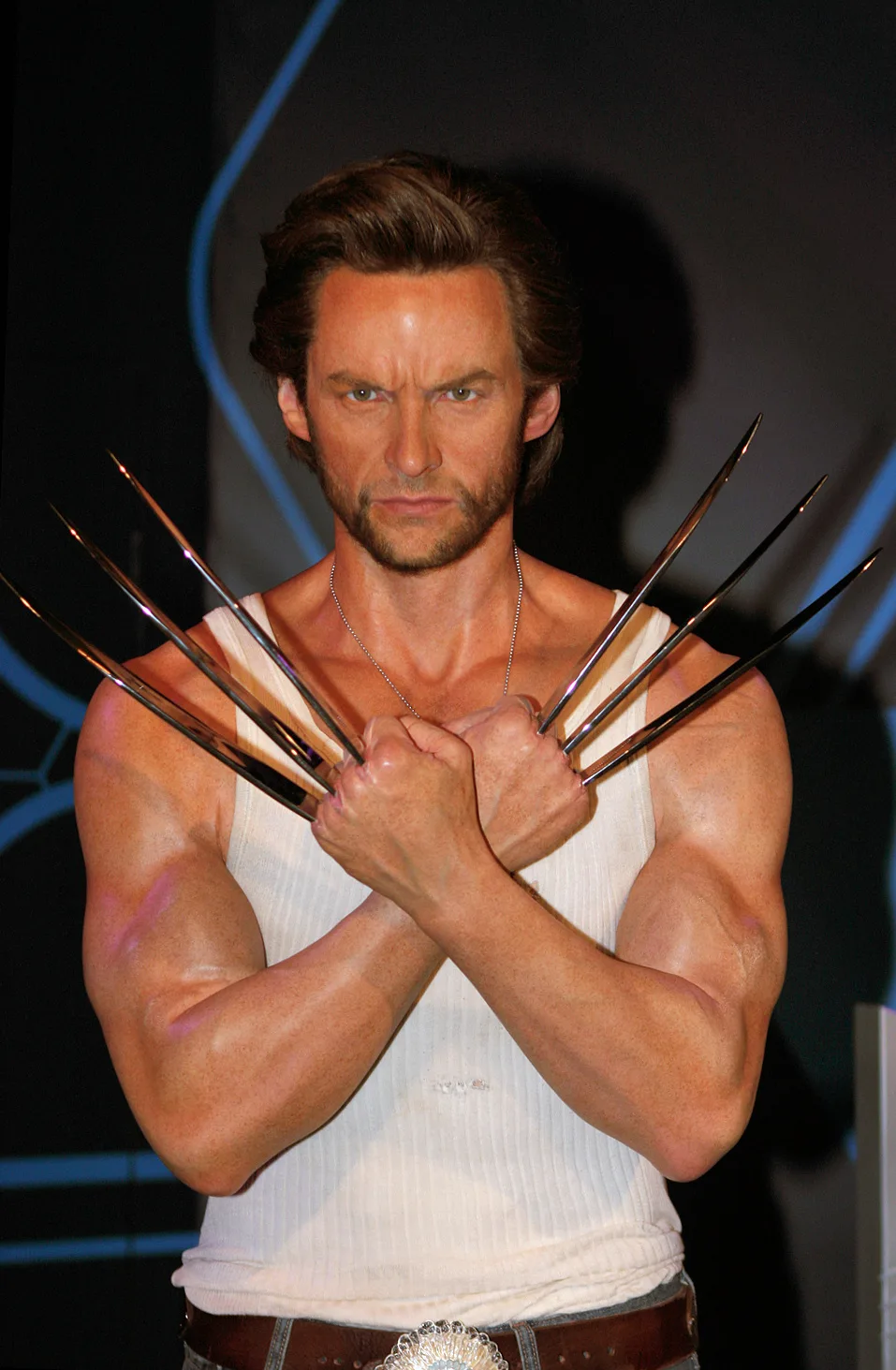
A celebrity wax figure starts with a real person sitting very still in a studio. Sculptors take hundreds of measurements of their head and body, photograph them from every angle, and record their exact skin and eye colour. Only after that sitting does the slow work of building the likeness begin.
The finished figure can take months to complete. Every strand of hair is often inserted by hand. The result is meant to be close enough to the real person that visitors do a double take — and the gap between a good figure and a creepy one is what sculptors call the uncanny valley.
Where did wax figures of famous people come from?
Wax portraits of well-known faces are older than photography. The tradition most people know today runs through Madame Tussauds, which the site's own history traces to its first permanent home in Baker Street, London, in 1835. As Wikipedia notes in its history of celebrity culture, the magazine Punch observed in 1849 that "no one can be considered positively popular, unless he is admitted into the company of Madame Tussaud's celebrities in Baker Street" — a sign that being turned into wax was already a marker of fame by the mid-19th century.
That old rule still holds in spirit. A figure is a kind of public recognition made physical. It joins the same machinery as magazine covers and viral clips: proof that a face has reached a certain level of mass attention.
What happens at the measurement sitting?
Everything begins with the sitting, and it is the part visitors never see. The subject sits in a studio while a team of sculptors works around them. The process typically involves: This connects to our earlier piece, AI ads using fake celebrities: how the scam actually works.
- Hundreds of precise measurements of the head, face, hands and body.
- Photographs taken from many angles, including close-ups of the eyes, ears and hands.
- Colour matching for skin tone, taken from several points on the face so the paint layers later look natural.
- Hair samples matched for colour and texture, and eye colour matched directly.
- A conversation about pose, expression and wardrobe — the figure needs a character, not just a face.
The sitting is also why some figures look more alive than others. A subject who gives the sculptors time and expression to work with tends to end up with a figure that reads as relaxed. A rushed sitting shows.
How is the sculpture actually built?
After the sitting, the team builds a full-size clay or plasticine model of the head. This is the heart of the likeness work. The sculptor keeps the photos and measurements close and checks the model against them constantly, adjusting the distance between the eyes, the set of the jaw, the shape of the nose.
Once the clay head is approved, a mould is made from it. Molten wax is poured into that mould in layers, so the finished cast is not one solid block but a shell with the right thickness. The head is cast first and refined the most; the body is built separately, often over an armature — an internal metal frame that lets the figure stand and hold its pose.
Why is the hair inserted by hand?
Hair is the detail that separates a passable figure from a convincing one. On the best figures, each strand is inserted into the wax scalp one at a time, using a small needle tool, following a mapped hairline and natural growth direction. Eyebrows and eyelashes get the same treatment.
It sounds obsessive, but the reason is practical. Wigs and glued hair read as fake at close range, and visitors get very close. Individually inserted hair lets the figure be groomed, styled and changed over the years as the real person's look changes.
What is the uncanny valley problem?
The uncanny valley is the discomfort people feel when something looks almost human but not quite. A wax figure sits right on the edge of it. Too smooth, and it looks mannequin-ish. Too detailed, and the tiny errors — a pore in the wrong place, an eye that catches light slightly wrong — become the thing you notice.
Sculptors manage this in a few ways:
- Layered colour: the wax is painted in translucent layers, not one flat skin tone, so light passes through it the way it does through real skin.
- Imperfection on purpose: freckles, faint veins and slight asymmetry are added because a flawless face reads as artificial.
- Eyes built with care: the eyes are usually acrylic, matched to the subject's, and set at the right depth — the single detail people notice first.
- Expression: a neutral face can fall into the valley; a slight, specific expression reads as a person.
Our analysis: the figures that work best are the ones that commit to a moment. A figure frozen in a generic pose invites comparison with a statue. A figure caught mid-laugh, in a pose you recognise from the red carpet, gives the eye something to accept.
What happens after the figure is finished?
The finished figure gets styled — clothes chosen with or supplied by the subject, hair cut and set, makeup applied directly to the wax. Then it goes on display, where its life is not over. Teams maintain figures continuously: touching up paint, restyling hair, repairing hands worn by thousands of visitors.
Figures are also updated or retired as fame changes. That maintenance cycle is part of the point. A wax figure is a snapshot of a public image at one moment, and public images move. Coverage of a celebrity's career — the kind of steady, sourced reporting you can follow in our celebrity section — is what decides whether a figure stays current or quietly leaves the floor. For related coverage, see What 'sources close to' actually means in celebrity reporting.
Why do we find wax figures fascinating?
A wax figure is fame you can stand next to. It takes a face that usually arrives through a screen — in a viral clip, a film, a photo — and makes it physical at actual scale. That is the same pull that drives the rest of viral celebrity culture: the wish to get close to something usually kept at a distance.
It also raises the same question every likeness raises, from deepfakes to fan edits: who controls a famous face? With wax, the answer has always been clearer than with digital copies. The figure is made with the subject's cooperation, measured from their actual body, and maintained as a kind of authorised portrait. In a media environment full of unauthorised likenesses, that may be the most old-fashioned thing about it.
What this means for the next figure you see
When you look at a wax celebrity, you are looking at months of handwork: a sitting, hundreds of measurements, a clay head, a wax cast, and hair placed strand by strand. The good ones hide all of that. The near misses show you exactly where the craft lives.