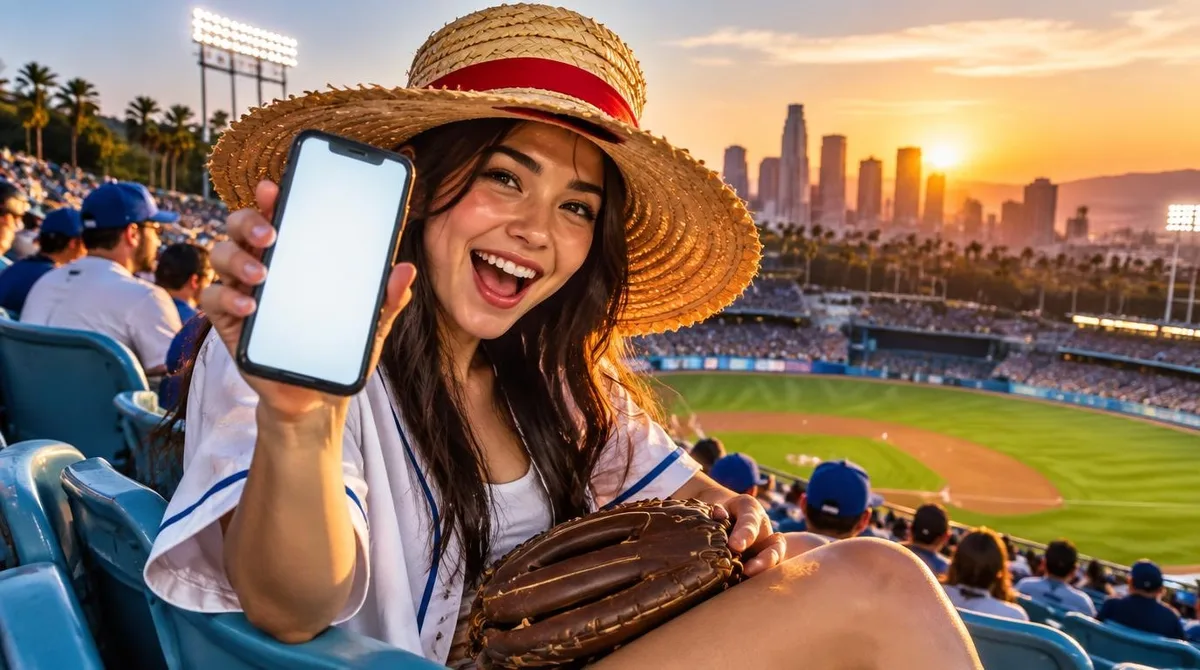
Pop culture is now one of the live-events industry's best customer-acquisition tools, according to StubHub's 2026 trend report, "Screens to Stands." The clearest proof: when the Los Angeles Dodgers announced a promotional game celebrating the anime series One Piece, ticket demand on StubHub surged to 75 times the team's typical daily pace. Nearly two-thirds of buyers that day had never purchased Major League Baseball tickets through the marketplace before.
That is not an outlier. It is a pattern, and it runs from baseball parks to Broadway to concert venues. The report, which examines ticketing, search and consumer behavior data through October, was covered by TicketNews, with additional StubHub data supplied to that outlet. Here is what the numbers actually show, and what they do not.
How big is the pop culture effect on ticket demand?
The spikes are dramatic and consistent across properties. The Yankees saw demand jump to nine times their typical daily pace after announcing a Naruto-themed game. That promotion drew twice as many buyers new to MLB on StubHub as other games in the same series. Eleven MLB teams hosted games centered on KPop Demon Hunters, and those games attracted 22% more first-time MLB ticket buyers on the marketplace than comparable matchups.
The crossover reaches beyond anime. Promotional games celebrating Fourth Wing, Rebecca Yarros's bestselling fantasy novel, drew 20% more first-time StubHub buyers and 13% more first-time MLB buyers than comparable games in the same series. Individual results were strong too: the Mets' Sept. 14 game saw demand 63% higher than the series average, the Giants' Aug. 24 game attracted 51% more new buyers, and the Rockies' May 2 game ran 20% above the series average.
Broadway shows the same shape. StubHub recorded a 911% single-day demand increase for "Chicago" after announcing that Whitney Leavitt, a star of Hulu's "The Secret Lives of Mormon Wives," would join the cast. Once she began performing as Roxie Hart, interest climbed 203% above typical levels. Casting former Dallas Cowboys Cheerleader Reece Weaver in "Chicago" coincided with a 760% demand increase, and the announcement that internet personality Dylan Mulvaney would join "Six" preceded a 333% increase.
Why does this matter for the live industry?
Because it changes how a team or a show fills seats. Baseball's regular season is long, and demand usually depends on the opponent, a star player or a game's competitive stakes. A cultural partnership gives people outside the established audience a different reason to show up. The promotional event becomes the attraction; the game is the setting.
"What stood out to us this year is how quickly fandom can move from online communities into real-world experiences," Jill Gonzalez, head of consumer, product and tech communications at StubHub, told TicketNews. "Whether it's anime fans showing up for baseball or digital creators bringing audiences into traditional entertainment spaces, we're seeing people follow the communities they care about into new categories of live events." For related coverage, see Festival lineup rumors: where they come from and how to check them.
That matches what fandom watchers have seen for years: communities built online do not stay online. The same dynamic that fills fan conventions is now filling ballpark seats and theater rows. Fandom is portable, and ticket sellers have noticed.
Do these buyers come back?
This is the open question, and the honest answer is: partly unproven. StubHub studied first-time MLB buyers from three themed games — the Dodgers' One Piece promotion on July 2, the Giants' KPop Demon Hunters game on Aug. 14 and the Yankees' Naruto promotion on Sept. 8. Each game was followed by increased interest in future MLB games, the marketplace told TicketNews.
But there is a twist. Searches outside MLB after those games ran roughly 1.5 to 4.5 times as high as MLB-specific searches. In other words, the crossover may benefit the whole live-events market, not just the team that hosted the night. "Fandom is fluid," Gonzalez said. "People aren't necessarily defining themselves as only sports, music or theater fans."
Two caveats belong right next to those numbers. First, the research does not establish how many of those later searches turned into actual ticket purchases. Second, StubHub's "first-time buyer" figures reflect purchasing history on StubHub only. Someone buying an MLB ticket there for the first time may have attended games before using tickets acquired elsewhere. Both points matter when weighing the long-term value of these partnerships.
What does this say about how fandom works now?
The deeper finding is structural. A fan's identity is no longer a single category. The same person can follow a reality TV cast, read a fantasy series and root for a baseball team — and each community can pull them toward a new kind of live event. That is why a BookTok-adjacent novel like Fourth Wing can move baseball tickets, and why a reality star can move them on Broadway. It is the same fluidity that decides who gets credit when a fandom trend breaks big: communities, not categories, are the unit that matters. This connects to our earlier piece, Fandom trend credit: Who made that trend? When fandom credit gets erased.
It also explains the Latin music surge the report notes. Demand for Latin music concerts rose after Bad Bunny's Super Bowl halftime performance — a single televised moment redirecting attention toward an entire concert category. One event, one huge audience, one new funnel.
What should readers watch next?
The conversion question is the one to track. If themed promotions keep producing buyers who return — and if those off-platform searches keep turning into purchases — expect more teams, shows and venues to program around fandoms rather than matchups. If the repeat-purchase data never materializes, these collaborations may prove to be one-off spikes rather than durable customer pipelines. StubHub's own report leaves that question open, and it is the number worth watching in next year's edition.
For now, the confirmed picture is this: pop culture events reliably produce first-time buyers at scale, measured in multiples and triple-digit percentage spikes, on StubHub's own marketplace data. Whether they stay buyers is still, by StubHub's own admission, unproven.